
Welcome to the "Auspicious Clouds" Training Hall
In traditional Japanese martial arts, Auspicious Clouds (Zuiun, 瑞雲) symbolize the bridge between physical technique and deep spiritual philosophy. While frequently used as a visual motif in dojo design, their deeper meaning relates directly to a martial artist's mindset, movement, and personal development. These three elements are essential to proper training, and they must be developed evenly to achieve true balance. Here is how the concept of auspicious clouds applies to the warrior's path as we teach it at our dojo:
The Ideal Mindset: Formless and Adaptable
In traditional Budo, clouds represent the ultimate goal of mental and physical adaptability. A cloud has no fixed shape; it conforms perfectly to the wind, changes effortlessly, and cannot be grasped or struck by an opponent.
The Unfettered Mind (Mushin, 無心): Just as clouds drift across the sky without leaving a trace, a practitioner strives for a mind that is clear and unburdened by fear, anger, or premeditated thoughts.
Fluidity Over Force: In martial arts like Bujinkan Budo Taijutsu, rigidity leads to defeat. Movement should be like a cloud — soft, fluid, and continuous, yet capable of delivering immense power when it condenses.
Harmonizing Heaven, Earth, and Man (Tenchijin)
Traditional martial arts often organize their fundamental teachings around the concept of Tenchijin (天地人):
Earth (地): Represents solid stance, structure, and physical technique.
Heaven ( 天 ): Represents the sky, strategy, cosmic order, and spirit.
Man (人): Represents the practitioner standing between them, balancing both.
Because clouds reside in the heavens but bring life-giving rain to the earth, they symbolize the harmony of these elements. It is a reminder to elevate training beyond mere physical combat and align it with higher spiritual principles and natural law.
About The ZuiUn Dojo 瑞雲道場
The Meaning Behind Zuiun Dojo 瑞雲道場 Logo
When a martial arts school adopts the name or symbol of the auspicious cloud, it transforms the dojo from a place of physical combat into a sanctuary.
A Sign of Safe Harbor: Historically, an auspicious cloud indicated divine favor and peace. In a dojo context, it signifies a safe space where students can strip away their egos, train with integrity, and cultivate positive energy.
Continuous Refinement: Just as clouds are constantly forming and reforming, a martial artist's journey is one of endless transformation. The endless ring of clouds encourages students to view their training not as a final destination (like reaching a certain belt rank), but as a lifelong, evolving process.
Traditional Japanese Learning Concepts
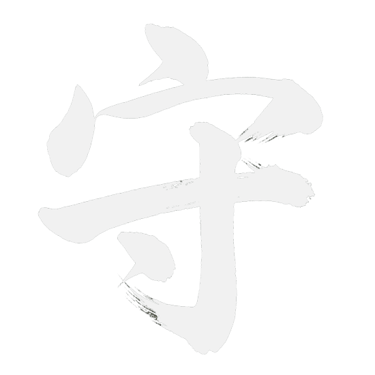
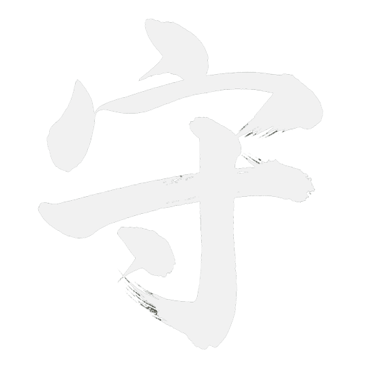
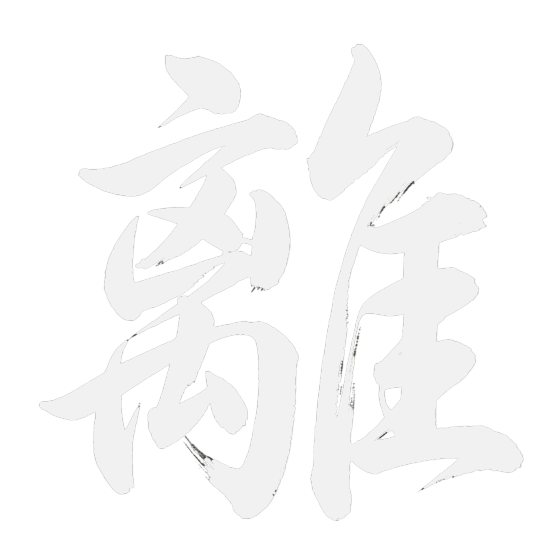
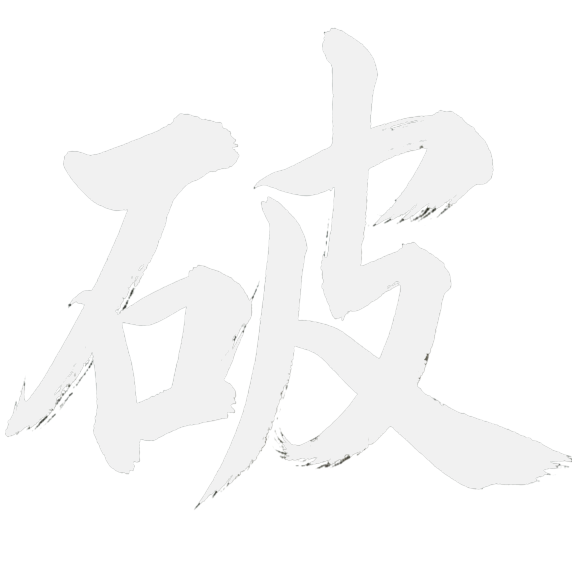
At ZuiUn Dojo, we follow the traditional Japanese learning progression known as Shu–Ha–Ri (守破離). This framework describes how students naturally grow from disciplined imitation to informed adaptation and, ultimately, to authentic personal expression. It is used throughout Japanese martial arts, classical arts, and even in broader life practice.
Shu–Ha–Ri is not a rigid ladder or a set of fixed stages. It is a living process that guides a student from faithfully preserving the forms they receive, to exploring and understanding their deeper principles, and finally to expressing the art in a way that is both personal and true to its lineage. Through this progression, students move from imitation to innovation without ever losing the thread of tradition that anchors their training.
Ha (破) — break / loosen
Ha begins when the student starts to understand why techniques work. Forms are no longer copied mechanically; they are examined, compared, and adjusted with intention. The practitioner explores variations, studies other schools, and adapts techniques to context, body type, and circumstance.
This “breaking open” is not a rejection of tradition. It is a release from rigid dependence. Mistakes increase, but understanding deepens. Ha is a phase of questioning, refinement, and deliberate choice—where insight begins to shape expression.
Ri (離) — detach / transcend
Ri is the phase of natural, unforced expression. Technique emerges without conscious effort, and form arises spontaneously from principles that have been absorbed through long, disciplined practice. The practitioner is no longer confined by stylistic boundaries, yet expresses them fully and authentically.
The teachings in this stage become transmission rather than explanation. What is passed on is not just method, but understanding. In Ri, the art is no longer something you perform—it is something you genuinely embody.
Shu (守) — preserve / follow
Shu is the phase of disciplined learning. The student follows the teacher’s forms, techniques, etiquette, and rhythm exactly as they are given, without trying to modify or personalize them. This isn’t blind obedience—it is an expression of respect. Through steady, correct repetition, the body absorbs structure, timing, posture, and mindset until they become natural.
In Budō, Shu builds security, discipline, and humility. The ego steps aside, and trust in the lineage becomes essential. This phase establishes the foundation for everything that follows; skipping Shu weakens every later stage of training.
Contact
Our Sponsor Dojo Bujinkan Madison Dojo
We believe that the practice of martial arts is for everyone equally. We do not care about your race, gender, religion or orientations, you are welcome to practice and learn with us.